
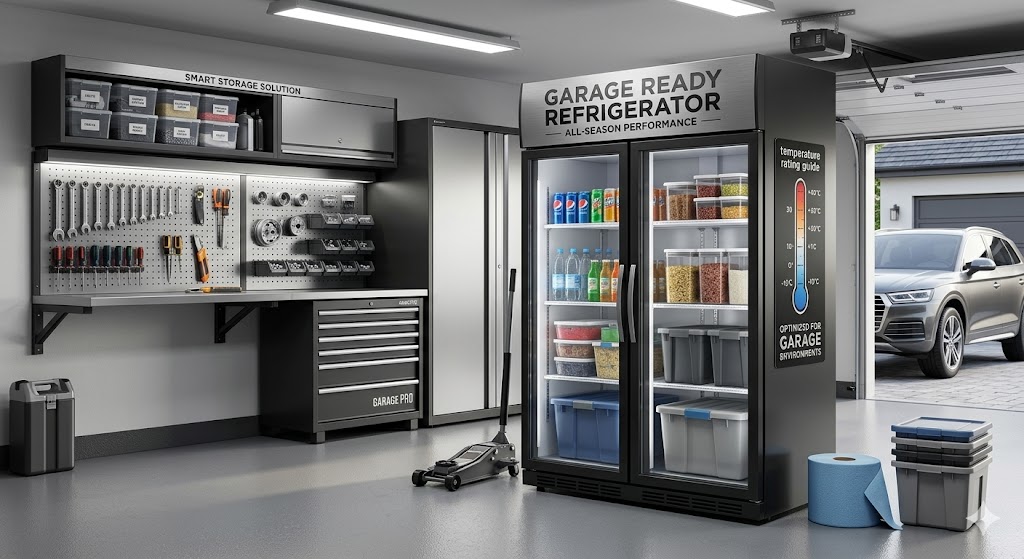
A Garage Ready Refrigerator is specifically designed to work in spaces where temperatures can swing dramatically throughout the year. Unlike standard kitchen refrigerators, these models are engineered to operate properly in both hot summers and freezing winters. This matters because garages, workshops, and basements are often not climate-controlled, which can affect cooling performance and food safety.
According to experts from GE Appliances, many Garage Ready Refrigerator models are tested to perform between 38°F and 110°F. That wider operating range helps maintain stable temperatures even when outdoor weather becomes extreme.
What Is a Garage Ready Refrigerator?
A Garage Ready Refrigerator is specifically designed to operate efficiently in environments where temperatures can become extremely hot or cold. Unlike traditional kitchen refrigerators, these models are tested to work in garages, workshops, basements, and utility spaces where climate control is limited.
Standard refrigerators usually perform best between roughly 55°F and 110°F. When temperatures fall below that range, the compressor may stop cycling properly, which can lead to thawing food in the freezer section. In very hot garages, the appliance may run constantly, increasing wear, energy consumption, and the risk of early failure.
Garage Ready Refrigerator models solve this problem with upgraded temperature controls, improved insulation, and specialized compressor systems. Some even include dedicated “Garage Mode” settings that help maintain stable cooling during cold weather. Manufacturers such as Whirlpool and major appliance retailers now clearly label products designed for these harsher environments.
How Garage-Ready
The biggest difference between a regular refrigerator and a garage-ready unit is how the appliance reacts to changing ambient temperatures. In cold weather, many traditional refrigerators mistakenly assume the inside is already cold enough, so the compressor runs less frequently. That can cause freezer temperatures to rise unexpectedly.
Garage ready refrigerators use advanced sensors and wider operating temperature ranges to prevent this issue. Some models are designed to work in temperatures as low as 0°F, while others comfortably operate up to 110°F or higher.
Manufacturers may also include features like:
- Enhanced compressor protection
- Improved airflow systems
- Heated thermostat components
- Stronger door seals
- Better insulation for temperature retention
A detailed guide published by Fridge.com explains that checking the official ambient temperature range is one of the most important steps before buying. Not every refrigerator advertised for garages handles extreme winter conditions equally well.
Important Features to Look For

When shopping for a Garage Ready Refrigerator, focusing only on size or appearance is not enough. Performance in changing conditions matters far more than cosmetic features.
One of the first things to check is the operating temperature range listed in the specifications. If your garage regularly becomes freezing cold in winter or extremely hot during summer, the refrigerator should explicitly support those conditions. Trusted appliance experts recommend verifying the exact range instead of relying solely on marketing labels.
Energy efficiency is another important consideration. Garage Ready Refrigerator often work harder than indoor kitchen units because of fluctuating temperatures. Choosing an ENERGY STAR-certified model can help reduce long-term electricity costs. Better Homes & Gardens notes that energy-efficient models are especially useful for households running a second refrigerator year-round.
Other useful features include:
| Feature | Why It Matters |
|---|---|
| Adjustable shelving | Easier stood |
| Frost-free operation | Reduces maintenance |
| Strong door gaskets | Improves cooling efficiency |
| Temperature alarms | Helps protect stored food |
| Garage mode settings | Better cold-weather performance |
Capacity also matters. Smaller households may only need a compact beverage Garage Ready Refrigerator, while large families often prefer full-size models with freezer sections for bulk groceries.
Pros and Cons of Garage Ready Refrigerators
One major advantage of Garage Ready Refrigerator is reliability in difficult environments. They are built specifically for spaces where regular refrigerators may struggle or fail. Homeowners who store extra frozen food, drinks, or meal prep supplies often find them extremely convenient.
Another benefit is storage flexibility. A second refrigerator in the garage helps reduce kitchen clutter, especially during holidays, parties, or large grocery shopping trips. Many families use garage refrigerators for beverages, frozen meat, or overflow storage after warehouse shopping runs.
However, there are also a few downsides to consider. Garage Ready Refrigerator can cost more upfront than standard models. Because they are designed to tolerate wider temperature swings, they may also consume more electricity under extreme conditions.
Some users on appliance discussion forums also report mixed long-term reliability experiences depending on the brand and local climate. Reddit discussions frequently mention Whirlpool and Frigidaire as common choices, while opinions on GE models are more divided among owners and repair technicians.
Best Brands and Real User Experiences
Several major appliance companies now offer Garage Ready Refrigerator in different sizes and styles. Popular brands include Whirlpool, Frigidaire, GE Appliances, and LG.
Industry reviews from sources like Better Homes & Gardens and The Spruce often highlight garage-ready top-freezer refrigerators because they tend to be simpler, more durable, and easier to maintain.
Consumer feedback also suggests that simpler refrigerator designs may last longer than feature-heavy smart appliances. Many experienced appliance owners recommend avoiding overly complex ice makers and touchscreens in garage environments where dust and temperature swings are common.
Before purchasing, it is wise to:
- Read owner reviews carefully
- Verify warranty coverage for garage installation
- Measure garage space accurately
- Check ventilation requirements
- Confirm local service availability for repairs
Conclusion
A Garage Ready Refrigerated can be a smart investment for homeowners who need extra storage in a non-climate-controlled space. These appliances are specifically designed to handle extreme temperatures that would cause many standard refrigerators to struggle.
The best model depends on your climate, storage needs, and budget. Paying attention to temperature ratings, energy efficiency, and brand reliability is more important than choosing the most expensive option. For many families, a reliable garage-ready refrigerator provides valuable extra storage while protecting food safely throughout the year.
FAQs
IN
Garage-ready refrigerators are built to work in wider temperature ranges using upgraded controls, insulation, and compressor systems.
Can a regular soda
Sometimes, but standard refrigerators may struggle in very hot or cold conditions and can fail to maintain safe food temperatures.
Do garage-ready refrigerators use more electricity?
They may use slightly more energy because they work harder in extreme environments, especially during summer heat.
Which brands make garage-ready refrigerators?
Popular brands include Whirlpool, Frigidaire, GE Appliances, and LG.
Read About More: Low Profile Ceiling Fan With Light