Principles of Small Kitchen Design
Small kitchen design is all about making limited space feel efficient, comfortable, and visually open. Instead of focusing only on size, the real goal is to improve workflow—how you move between cooking, cleaning, and storage areas. A well-planned compact kitchen can often feel more practical than a larger one that is poorly organized.
Design experts consistently highlight the importance of the “kitchen work triangle,” which connects the sink, stove, and refrigerator in a smooth flow. This principle reduces unnecessary movement and makes cooking more efficient. According to industry guidance from the National Kitchen & Bath Association, smart planning and ergonomic placement are key foundations of any functional kitchen design NKBA Kitchen Design Principles.
Another major principle is minimizing visual clutter. In Small Kitchen Design, every item on display affects how spacious the room feels. Clean surfaces, hidden storage, and streamlined appliances help create a more open atmosphere. Even simple choices like handleless cabinets or integrated appliances can dramatically improve the sense of space.
Color and material selection also play a major role. Light tones, reflective surfaces, and consistent textures help bounce light around the room, making it appear larger than it actually is. The idea is not just to decorate but to visually expand the kitchen without changing its footprint.
Smart Storage Solutions for Small Kitchens
Storage is the backbone of effective small kitchen design, and without it, even the most stylish kitchen quickly becomes cluttered and stressful to use. The challenge in compact spaces is not just finding storage, but using every available inch intelligently. This includes vertical space, hidden compartments, and multi-functional furniture that reduces wasted areas.
One of the most effective strategies is using vertical storage. Tall cabinets that extend to the ceiling help eliminate unused upper space while providing room for items that are not needed daily. Open shelving can also work well when used carefully, as it keeps frequently used items accessible while adding a sense of openness to the room. Pull-out drawers and corner units are especially useful because they make deep, hard-to-reach spaces functional instead of wasted.
Modern kitchen design sources such as Houzz consistently emphasize the importance of customized storage solutions in Small Kitchen Design, especially modular systems that adapt to user needs over time Houzz Kitchen Storage Ideas.
Another key element is hidden storage. Built-in organizers inside cabinets, drawer dividers, and pull-out pantry systems help reduce clutter on countertops. When surfaces are clear, the entire kitchen instantly feels larger and more organized. Even small additions like magnetic knife strips or under-shelf baskets can significantly improve usability without taking up extra room.
Space-saving appliances also play a major role here. Slim refrigerators, compact dishwashers, and combination microwave-ovens are designed specifically for smaller layouts. Choosing the right appliances ensures that storage is not sacrificed for functionality.
Space-Saving Layout Ideas
In small kitchen design, layout is one of the most important factors that determines how usable and comfortable the space feels. Even a beautifully styled kitchen can become frustrating if the layout is inefficient. The goal is to create a setup that supports smooth movement between cooking, prepping, and cleaning areas without unnecessary steps.
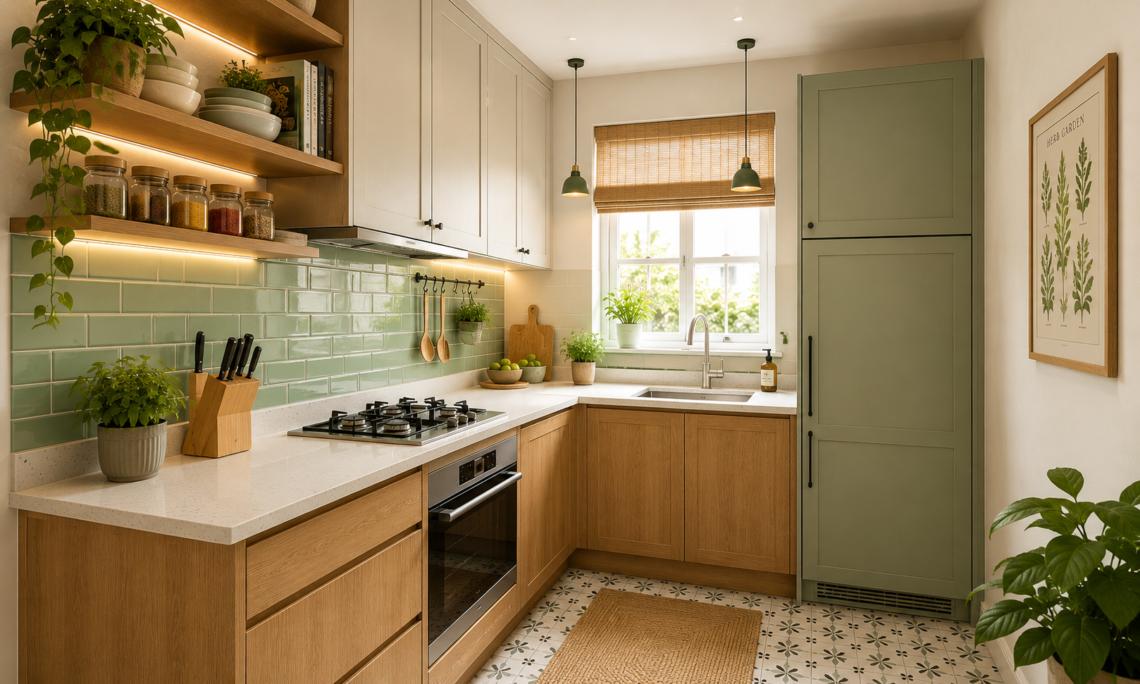
One of the most commonly recommended layouts for compact kitchens is the galley kitchen. This design uses two parallel walls, making everything highly accessible and reducing wasted walking space. Another popular option is the L-shaped layout, which opens up the kitchen into adjacent living areas and creates a more flexible working zone. Both layouts are widely used in modern apartment design because they maximize functionality in limited square footage.
Design professionals at Better Homes & Gardens highlight that choosing the right layout depends heavily on room shape and daily cooking habits, not just aesthetics Better Homes & Gardens Kitchen Layout Guide.
Another effective approach is incorporating a kitchen island only when space allows. In very Small Kitchen Design, a fixed island can actually restrict movement. Instead, portable islands or foldable counters are smarter alternatives. These provide extra prep space when needed but can be moved or tucked away when not in use.
Open-plan layouts are also becoming increasingly popular in modern homes. By removing unnecessary walls, the kitchen visually expands into the dining or living area, creating a sense of openness. This not only improves natural light flow but also makes the space feel less confined.
Lighting and Color Strategies
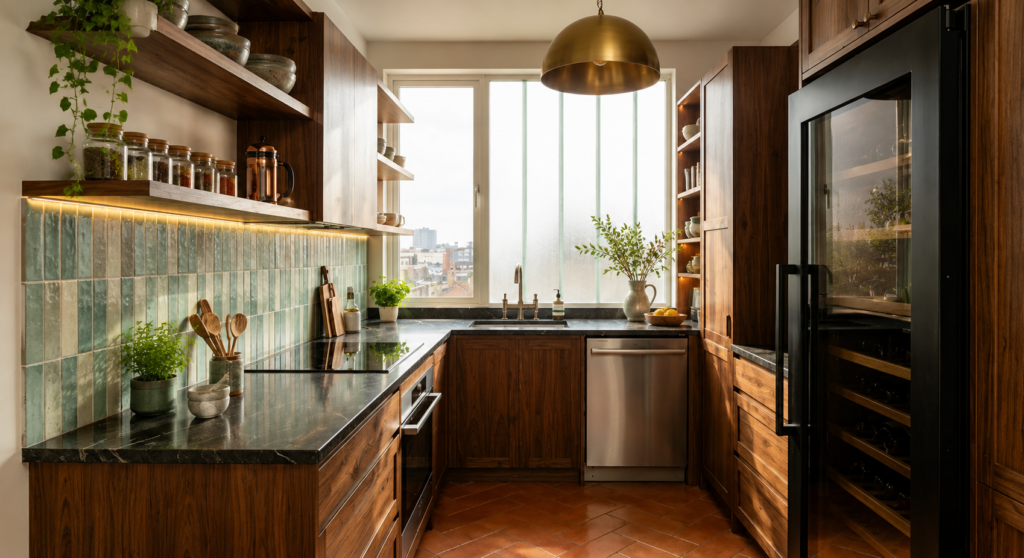
Lighting and color play a powerful role in small kitchen design, often making the difference between a cramped-looking space and one that feels open and inviting. Since physical space is limited, visual tricks become essential. A well-lit kitchen not only looks larger but also improves safety and usability during cooking.
Natural light is the most valuable element whenever available. Large windows or even a small skylight can dramatically change how a kitchen feels. When natural light is limited, layered artificial lighting becomes essential. This includes ambient lighting for general brightness, task lighting for cooking areas, and accent lighting to highlight key design features. Under-cabinet LED strips are especially effective because they brighten work surfaces without taking up space.
According to architectural design insights from ArchDaily, layered lighting is one of the most reliable ways to enhance both functionality and atmosphere in compact interiors ArchDaily Kitchen Lighting Design.
Color choice is equally important in creating a sense of space. Light shades such as white, cream, soft grey, and pastel tones reflect more light and make walls feel farther apart. Glossy or semi-gloss finishes on cabinets and backsplashes can further enhance this effect by bouncing light around the room. However, this doesn’t mean Small Kitchen Design must avoid bold colors entirely—using darker tones as accents can add depth and character when balanced properly.
Another effective technique is maintaining color consistency. When cabinets, walls, and countertops share similar tones, the visual boundaries of the Small Kitchen Design blur slightly, making the space feel more unified and open. Minimal contrast often works better than heavy visual separation in compact layouts.
Modern Trends & Materials for Small Kitchens
Modern small kitchen design is increasingly focused on combining style with practicality. Homeowners today want kitchens that feel open, efficient, and visually clean, without sacrificing durability. This has led to a strong shift toward minimalist aesthetics, smart materials, and multi-functional surfaces that help maximize every inch of space.
One major trend is the use of handleless cabinetry and flat-panel designs. These create a smooth, uninterrupted surface that reduces visual clutter and makes the kitchen feel larger. Integrated appliances are also becoming standard in Small Kitchen Design, as they blend seamlessly into cabinetry rather than breaking up the design. This creates a unified look that enhances the sense of openness.
Design insights from Dezeen, a leading architecture and design platform, highlight how minimalism and integration are shaping modern compact kitchen aesthetics worldwide Dezeen Kitchen Design Trends.
Material choice is another important factor. Quartz countertops are popular because they are durable, low-maintenance, and visually clean. Reflective surfaces like glass backsplashes or glossy tiles help bounce light around the room, making the space feel brighter. At the same time, matte finishes are used strategically to balance shine and prevent the kitchen from feeling overly sterile.
Another growing trend is the use of modular kitchen systems. These allow homeowners to customize storage, shelving, and work areas based on their needs. Modular designs are especially useful in apartments where space requirements may change over time. In addition, eco-friendly materials like bamboo and recycled wood are gaining popularity as people look for sustainable yet stylish solutions.
Finally, smart kitchen technology is slowly becoming part of compact design. From space-saving induction cooktops to compact smart appliances, technology is helping Small Kitchen Design become more efficient without adding clutter.
Conclusion
Small Kitchen Design can be just as functional and stylish as large ones when designed thoughtfully. The key is combining smart layouts, efficient storage, proper lighting, and modern materials to make the most of limited space. Every decision—from cabinet style to color choice—contributes to how open and usable the kitchen feels.
With the right approach, even the smallest kitchen can become a highly practical and visually appealing part of the home.
FAQs
1. What is the best layout for a Small Kitchen Design?
Galley and L-shaped layouts are usually the most efficient for compact spaces.
2. How can I make my small kitchen look bigger?
Use light colors, reflective surfaces, and good lighting to create a more open feel.
3. What storage is best for small kitchens?
Vertical cabinets, pull-out drawers, and hidden storage solutions work best.
4. Are kitchen islands suitable for small kitchens?
Only if space allows—portable or foldable islands are better for very small areas.
Read About More: Dark Blue Kitchen Cabinets