Few American homes have captured public imagination quite like Grey Gardens House. Located in East Hampton, New York, the historic mansion became internationally recognized through a groundbreaking documentary that offered an intimate look into the lives of its unusual residents. Decades after first entering popular culture, the property continues to attract historians, architecture enthusiasts, filmmakers, and curious visitors alike.
What makes Grey Gardens House so fascinating is that its story extends far beyond architecture. The estate became a symbol of family legacy, social change, resilience, and cultural fascination. From its connection to one of America’s most famous families to its role in documentary filmmaking history, Grey Gardens remains a subject of ongoing discussion and admiration.
The Origins of Grey Gardens House
Grey Gardens House was originally built in 1897 in the prestigious Georgica Pond area of East Hampton. The property was designed as a grand summer residence during a period when wealthy New Yorkers frequently established seasonal homes in the Hamptons. With its expansive grounds and elegant design, the estate quickly became one of the area’s notable residences. Historical reports indicate that the house eventually grew into a 28-room property surrounded by beautifully landscaped gardens.
The estate earned its distinctive name from the gray-colored sea mist and the lush gardens that surrounded the property. For many years, Grey Gardens represented the sophistication and privilege associated with East Hampton’s elite social circles. However, its future reputation would become tied not to luxury but to the remarkable lives of the family members who called it home.
Who Were Big Edie and Little Edie?
The story of Grey Gardens House cannot be told without understanding the remarkable women who lived there. Edith Ewing Bouvier Beale, commonly known as “Big Edie,” was a socialite and aspiring singer who belonged to the prominent Bouvier family. Her daughter, Edith Bouvier Beale, known as “Little Edie,” was a former debutante with ambitions of becoming a performer and model. The pair were closely related to former First Lady Jacqueline Kennedy Onassis, making their story particularly intriguing to the public.
By the early 1970s, Big Edie and Little Edie were living together in increasingly isolated circumstances within Grey Gardens House. Despite financial difficulties and deteriorating living conditions, they maintained a unique bond and an unmistakable sense of individuality. Little Edie became especially memorable for her creative fashion choices, witty observations, and strong personality. Their unconventional lifestyle would eventually become the centerpiece of one of the most influential documentaries ever produced, transforming them into unexpected cultural icons whose legacy continues to resonate today.
How Grey Gardens House Became Famous
Grey Gardens House entered popular culture through the acclaimed 1975 documentary Grey Gardens, directed by documentary filmmakers Albert and David Maysles. Originally interested in creating a film connected to Jacqueline Kennedy Onassis and her family, the filmmakers became fascinated by the lives of Big Edie and Little Edie. The resulting documentary offered an unusually intimate look at their daily routines, conversations, dreams, and challenges inside the aging East Hampton estate.
What made the film so significant was its cinéma vérité approach, allowing viewers to observe the mother-daughter relationship without narration or heavy editorial influence. Audiences were captivated by the women’s humor, resilience, and distinctive personalities. Rather than focusing solely on the deteriorating condition of Grey Gardens House, the documentary highlighted the humanity and complexity of its residents. Over time, the film earned critical acclaim and came to be regarded as one of the greatest documentaries ever made, ensuring that Grey Gardens House would remain a recognizable landmark in American cultural history.
The Restoration and Preservation of the Estate
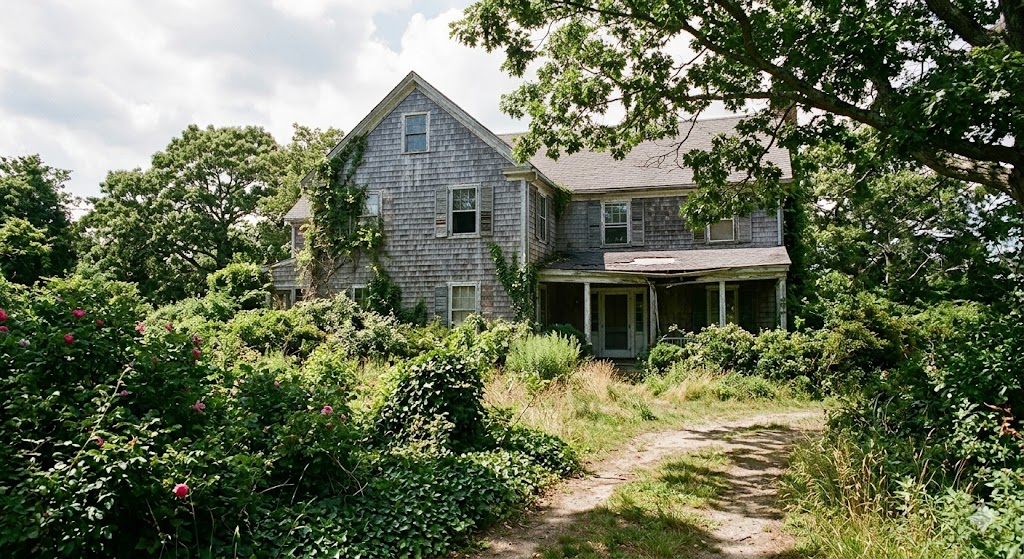
Following years of neglect, Grey Gardens House faced an uncertain future. By the mid-1970s, local authorities had raised concerns about the property’s condition, and significant repairs were required to make the house habitable. Public attention generated by the documentary increased interest in preserving the estate, and efforts were eventually made to restore the property while maintaining its historical character.
A major turning point came when journalist and former Washington Post editor Sally Quinn and her husband, author Ben Bradlee, purchased the property in 1979. They invested heavily in renovations, restoring the gardens, repairing structural damage, and returning much of the home’s original elegance. Their work helped transform Grey Gardens House from a symbol of decline into a celebrated example of historic preservation. Today, the estate remains one of the most famous private residences in East Hampton, admired for both its architectural charm and its extraordinary story.
The Cultural Legacy of Grey Gardens House
The influence of Grey Gardens House extends far beyond its physical location in East Hampton. The documentary inspired books, academic studies, fashion collections, stage productions, and television adaptations. In 2006, a successful Broadway musical introduced the story to a new generation, while HBO’s 2009 film adaptation further cemented the cultural significance of Big Edie, Little Edie, and the house itself. Few private residences have achieved such a lasting presence in popular culture.
Part of the enduring appeal of Grey Gardens House lies in the themes it represents. Viewers continue to see the story as an exploration of family relationships, personal identity, aging, independence, and resilience. Little Edie’s distinctive style has become particularly influential in fashion circles, while the documentary remains a frequent subject of discussion among filmmakers and media scholars. As a result, Grey Gardens House continues to attract interest from people who may never have visited East Hampton but are fascinated by its unique place in American history.
Conclusion
Grey Gardens House remains one of the most iconic homes in the United States because its story combines architecture, family history, documentary filmmaking, and cultural influence. What began as a prestigious East Hampton estate evolved into a symbol of individuality and resilience through the lives of Big Edie and Little Edie.
Today, the property is remembered not only for its elegant design and remarkable restoration but also for the unforgettable personalities who lived there. Decades after the documentary first aired, Grey Gardens House continues to inspire curiosity, discussion, and admiration among historians, filmmakers, and everyday readers alike.
FAQs
1. Where is Grey Gardens House located?
Grey Gardens House is located in East Hampton, New York, near Georgica Pond, one of the area’s most desirable residential locations.
2. Who lived in Grey Gardens House?
The home’s most famous residents were Edith “Big Edie” Bouvier Beale and her daughter Edith “Little Edie” Bouvier Beale, relatives of Jacqueline Kennedy Onassis.
3. Why is Grey Gardens House famous?
The estate became famous through the 1975 documentary Grey Gardens, which chronicled the lives of Big Edie and Little Edie.
4. Does Grey Gardens House still exist today?
Yes. The house still stands and has been extensively restored, preserving its historical significance and architectural beauty.
Read About More: Small Living Room Ideas with TV