Smart Layout Planning for Small Living Rooms with TV
Designing a Small Living Room Ideas with TV starts with one key principle: balance. The goal is to create a layout where the TV feels naturally integrated without dominating the space. In compact rooms, every inch matters, so arranging furniture in a way that improves flow is essential. A good layout also ensures that seating, viewing angles, and walking paths don’t compete with each other.
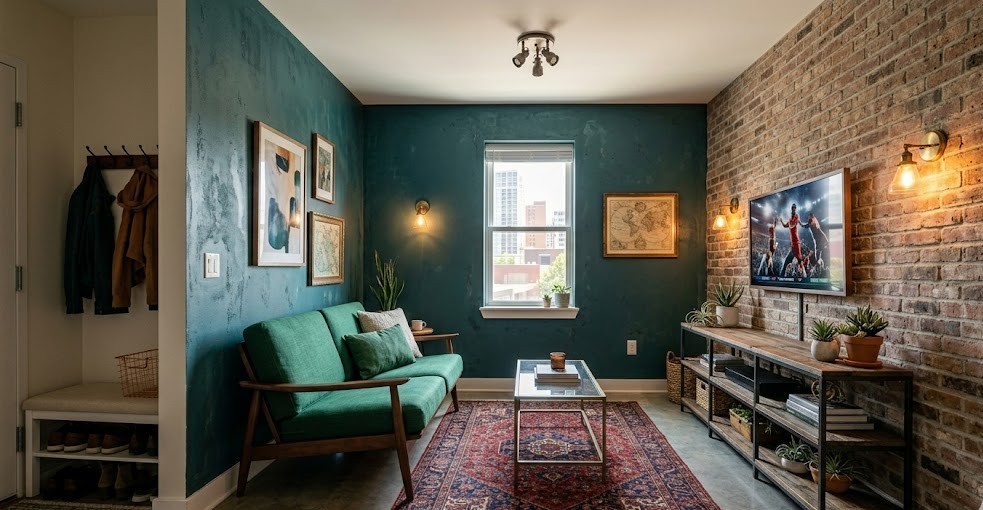
Many interior design experts from trusted platforms like Houzz Living Room Design Small Living Room Ideas with TV emphasize starting with a focal point—often the TV or a window—and building the seating arrangement around it. In small spaces, placing the sofa directly opposite the TV works well, but angled layouts or wall-mounted screens can open up more flexibility. The key is to avoid pushing all furniture against walls, which can actually make the room feel smaller and disconnected.
A practical approach is to divide the room into “zones.” One zone is for viewing and seating, while another can be a reading corner or small storage area. Small Living Room Ideas with TV This subtle separation helps maintain order and prevents the TV area from overwhelming the entire room.
Another important consideration is traffic flow. Even in a Small Living Room Ideas with TV, people should be able to move comfortably without stepping between the screen and seating. Keeping walkways clear improves both function and comfort, especially in multi-use spaces.
Choosing the Right TV Placement Without Overcrowding
Small Living Room Ideas with TV placement is one of the most critical decisions in a Small Living Room Ideas with TV. The wrong position can make the room feel cramped, while the right one can create a clean and modern aesthetic. Wall mounting is often the most space-efficient solution, as it removes the need for bulky TV stands and frees up floor space.
One popular approach is placing the Small Living Room Ideas with TV at eye level when seated. This reduces neck strain and creates a more natural viewing experience. If wall mounting isn’t possible, a slim floating console can work well, offering storage without visually weighing down the room.
Another smart trick is using corner placement when the room layout is irregular. This can free up a full wall for windows, shelving, or seating. However, it’s important to ensure the viewing angle remains comfortable from the main seating area.
For more inspiration on modern TV setups in compact homes, you can explore practical styling examples from IKEA Living Room Inspiration, which shows how minimal furniture and smart placement can transform small interiors without sacrificing comfort.
Furniture Ideas That Maximize Space and Comfort
In a Small Living Room Ideas with TV, furniture choice has a direct impact on how spacious or cramped the room feels. The best approach is to focus on lightweight, multi-functional pieces rather than bulky traditional sets. Sofas with slim arms, raised legs, and compact depth tend to visually open up the space while still offering comfort.
Another effective idea is using modular seating or sectionals designed for small rooms. These allow flexibility—you can adjust the layout depending on whether you’re watching TV, entertaining guests, or simply relaxing. Avoid overfilling the room; instead, choose fewer but more purposeful pieces that support both function and comfort.
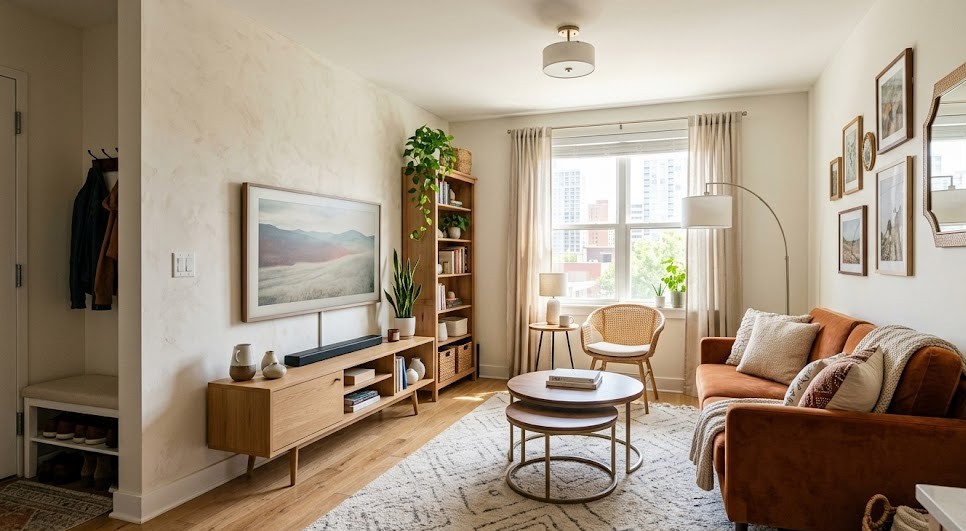
A coffee table should also be carefully chosen. Glass-top or nesting tables work particularly well because they don’t block visual flow. Similarly, wall-mounted shelves can replace large bookcases, helping you maintain storage without sacrificing floor space.
Even accent chairs should be selected thoughtfully. Instead of oversized recliners, go for armless or slim-profile chairs that can be easily moved around. This keeps the seating arrangement adaptable and prevents the room from feeling locked in.
Lighting and Color Tricks to Make the Room Feel Bigger
Lighting plays a major role in how spacious a Small Living Room Ideas with TV feels, especially when a TV is part of the setup. Natural light should always be maximized first. Keeping windows uncovered or using light, sheer curtains helps brighten the space and reduces the boxed-in feeling that heavy drapes can create.
Layered artificial lighting is equally important. Instead of relying on a single ceiling light, combine ambient lighting (like ceiling fixtures), task lighting (such as floor lamps), and accent lighting (like LED strips behind the TV). This layered approach reduces harsh shadows and creates depth, making the room feel larger and more dynamic even during nighttime TV viewing.
Color choices also have a strong psychological effect on space perception. Light, neutral tones such as soft whites, beige, and pale grey tend to reflect light better and visually expand the room. However, adding subtle contrast through cushions, rugs, or a feature wall behind the TV can prevent the space from looking too plain or sterile.
Many modern interior guides, including insights shared by professionals on platforms like Better Homes & Gardens Living Room Small Living Room Ideas with TV, recommend using a consistent color palette across walls and furniture. This helps reduce visual clutter and allows the TV area to blend naturally into the overall design instead of standing out too aggressively.
Storage Solutions That Keep the Space Clutter-Free
Storage is one of the most important elements in a Small Living Room Ideas with TV because clutter can quickly make the space feel even smaller. The goal is to keep everything organized while maintaining a clean visual flow around the TV area. Built-in storage or wall-mounted units are especially effective because they use vertical space instead of taking up valuable floor area.
Floating shelves around the TV are a popular choice because they provide storage without creating heaviness in the room. You can use them for books, decor, or small essentials while keeping the central viewing area clean. Another smart option is using furniture with hidden storage, such as ottomans or coffee tables with compartments, which help reduce visible clutter without sacrificing functionality.
Multi-purpose TV units are also highly effective in compact spaces. A slim media console that includes drawers or closed cabinets allows you to store cables, remotes, and devices neatly out of sight. Keeping surfaces minimal is key—too many visible items around the TV can make the space feel busy and smaller than it actually is.
Finally, vertical organization helps a lot in small rooms. Tall, narrow shelves or wall grids can store items upward rather than outward, keeping the floor area open and improving the overall sense of space.
Conclusion
Designing a Small Living Room Ideas with TV is all about balance, simplicity, and smart use of space. When the layout is planned carefully, the Small Living Room Ideas with TV blends naturally into the room instead of dominating it. Choosing the right furniture, keeping storage minimal, and using light-enhancing colors all work together to create a more open and comfortable environment.
Even small adjustments—like wall mounting the TV, selecting multi-functional furniture, or improving lighting—can completely change how the room feels. The key is to prioritize flow and functionality while keeping the design visually light and cohesive.
FAQs
1. What is the best TV size for a small living room?
A medium-sized TV (32–43 inches) usually works best, depending on viewing distance.
2. Should I mount the TV or use a stand in a small room?
Wall mounting is better because it saves floor space and reduces clutter.
3. How do I arrange furniture around a TV in a small space?
Keep seating directly facing the TV and avoid blocking walking paths.
4. What colors make a small living room look bigger?
Light neutrals like white, beige, and soft grey help make the room feel more open.
Read About More: Wood windows